Medical Device PCB Assembly
The Medical device PCB Printed Circuit Board Assembly(PCBA) business has expanded its irresistible beneficial influence due to the continuous growth of the tech world and its use in various fields. In recent years, its impact on the world of electronics has exceeded all forecasts, including IoT devices, smartphones, computers, artificial intelligence, and more.
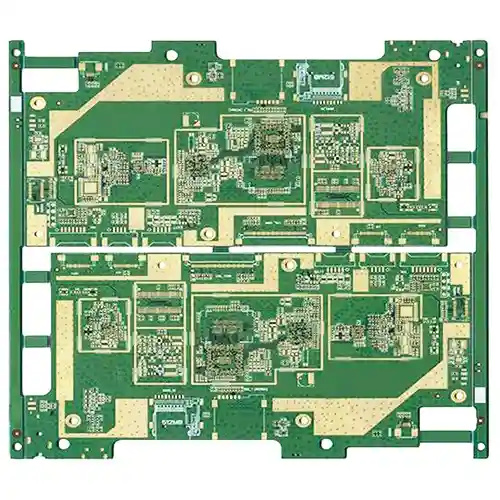
| Laminate | 8L |
| Dielectric constant | 4.2 |
| Plate Thickness | 1.6MM |
| Minimum Aperture: | 0.2mm |
| Minimum line width | 0.1MM |
| Minimum line spacing | 0.1MM |

Prototype to Full Turn-Key Assembly

Through-Hole Lead-Free Wave Soldering

Best Price, Genuine Components

Quality Accreditation ISO9001
-
Description
-
Specification
The Medical device PCB Printed Circuit Board Assembly(PCBA) business has expanded its irresistible beneficial influence due to the continuous growth of the tech world and its use in various fields. In recent years, its impact on the world of electronics has exceeded all forecasts, including IoT devices, smartphones, computers, artificial intelligence, and more.
Now, PCB assembly are transforming medical devices and bridging the gap between patients and physicians in the medical technology business.
PCB assembly, enabling the development of these convenient medical devices. Advances in healthcare technology are helping to solve several key challenges in the medical field, such as establishing accurate diagnoses and tracking patient health.
The medical electronics industry is growing rapidly and does not seem to be slowing down, which shows the influence of PCB assembly in the medical field. With the advancement of technology, PCB assembly is becoming more and more important in the medical field.
PCB assembly are required to operate medical devices such as defibrillators, electrical muscle stimulation devices, MRI, medical imaging systems, CT scans, and ultrasound equipment.
Medical Device PCB Assembly Technology and Its Types
Extra care must be taken to ensure reliability for those used in implants. First, they must be hygienic. They also have to be more compact than usual. Therefore, HDI (High-Density Interconnect) PCBs are used in most medical devices.
Application of Medical PCB Assembly in Healthcare Industry
Printed circuit boards and electronics play a vital role in the medical industry. Furthermore, with the advancement of technology, PCB assembly in the healthcare industry are rapidly expanding, opening up new possibilities.
PCB assembly are commonly used in the following applications:
Scanning equipment: CT scanners, X-ray screens, and ultrasound scans all rely on electronic components to work.
Monitors: Medical monitoring devices such as heart rate monitors, blood glucose monitors, and blood pressure monitors contain electronic components.
Medical Instruments: Medical research requires a variety of instruments to collect data and test results. PCB assembly are commonly found in electron microscopes, control systems, compressors, and other equipment.
Due to health concerns, PCBs must meet higher standards in the medical industry. Additionally, these devices must be reliable and of good quality to meet medical requirements. Due to device size constraints, medical device PCB assembly are mainly developed and tend to be smaller.
| Feature | Capability |
|---|---|
| Material | FR-4 Standard Tg 140°C, FR4-High Tg 170°C |
| Min. Hole Size | 0.15 ~ 0.3mm |
| Max Outer Layer Copper Weight (Finished) | 12oz |
| Max Inner Layer Copper Weight | 12oz |
| Board Thickness | 0.6-6mm |
| Surface Finishing | HASL lead-free, Immersion gold, OSP, Hard Gold, Immersion Silver, Enepig |
| Solder Mask | Green, Red, Yellow, Blue, White, Black, Purple, Matte Black, Matte green |
| Silkscreen | White, Black |
| Via Process | Tenting Vias, Plugged Vias, Vias not covered |
| Testing | Fly Probe Testing (Free) and A.O.I. testing |
| Build time | 5-15 days |
| Lead time | 2-3 days |